The six levers, and what each one really costs you
A while back we published a piece that takes a custom packaging quote apart line by line — where the money goes, from resin to carton. If you haven't read it, start there: cosmetic packaging cost breakdown. This article is the follow-up nobody asked for but every buyer needs: the actual levers I pull when a founder emails me and says "Andy, this is 30% over my budget."
Last month a founder in Berlin emailed me exactly that. Her serum tube quote had come in and she was ready to walk away from custom entirely. We went down the list below together. She didn't use all six levers — she used three — and the project survived. That's the honest pitch: you rarely need all of them.
One thing before the list. I sell packaging for a living, so you'd expect me to say "don't cut corners." I won't say that. Some of this money absolutely can be saved. Some of it will come back to bite you. I'll flag which is which as we go.
Lever 1: Standard molds vs. opening your own
Tooling is the first number on any custom quote, and it's the one that shocks new brands the most. Opening a dedicated mold for a tube head, a cap, or a jar body typically runs into the thousands of US dollars — think four figures, sometimes five depending on complexity and finish.
The question isn't "is tooling expensive." It's "how many units before it pays for itself." My rough rule: if your annual volume of that SKU is above roughly 50,000 pieces, a custom mold usually amortizes down to noise. Below 20,000 a year, you're paying a premium per unit that may never recover the tooling fee.
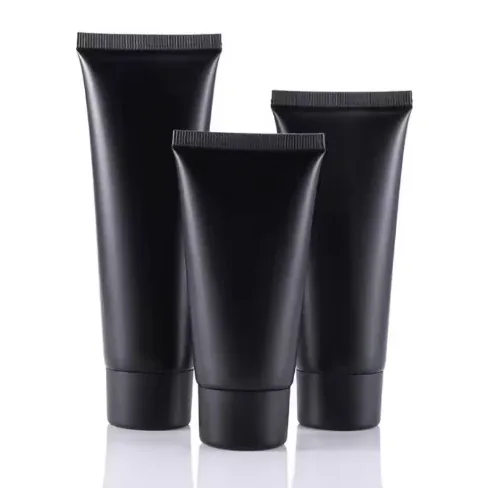
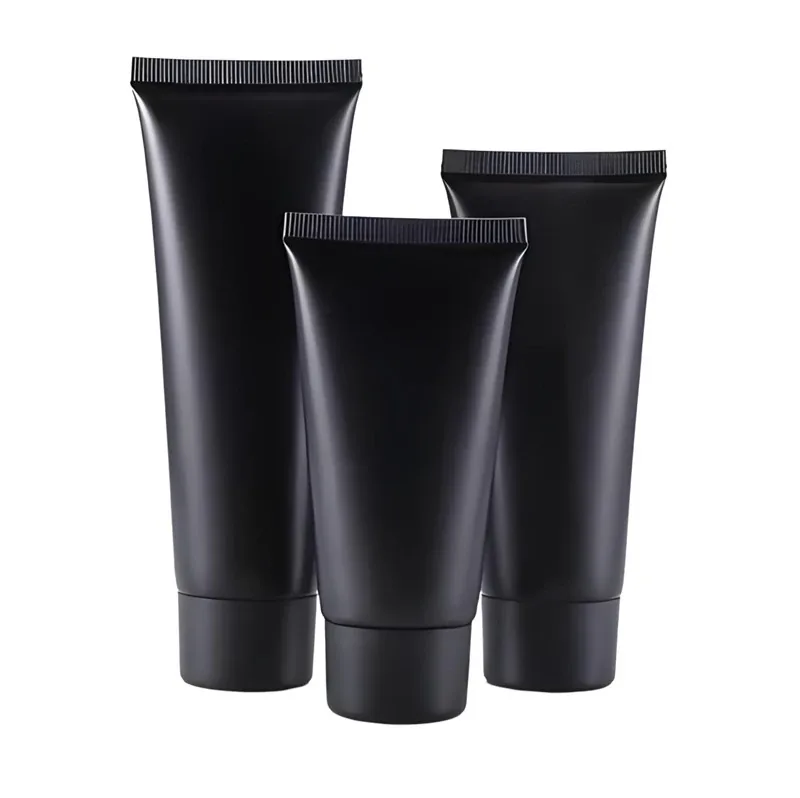
So the money-saving move at low volume is to use a stock mold. Most serious manufacturers keep a library of standard neck sizes and head styles — the common diameters, the standard screw caps, the familiar applicators. You lose the ability to say "this cap is uniquely ours." You keep the ability to ship. For a first SKU, that trade is almost always worth it.
| Stock mold | Custom mold | |
|---|---|---|
| Tooling cost | None | Thousands of US dollars, sometimes five figures |
| Shape | Standard necks and head styles | Uniquely yours |
| Break-even | Immediate | Worth it roughly above 50,000 pieces a year |
| Best for | First SKUs, under ~20,000 a year | Proven SKUs at stable volume |
The cost you can't save: if a retailer or your brand identity demands a shape nobody makes, tooling is non-negotiable. But check whether it truly demands it, or whether a designer said "it would be nice."
Lever 2: Print smart — colors, plates, and ganging
On a laminated or plastic tube, printing runs on offset presses, and every color adds a plate, a setup, and ink cost. Most modern lines, including ours, handle up to 6-color offset printing. The unit price difference between a two-color design and a five-color design is real — not dramatic per piece, but visible across an order.
Three moves here:
- Design within fewer colors. A clean two- or three-color design often looks more premium than a busy six-color one. Your designer may fight you on this. Buy them a coffee and show them Aesop's shelf.
- Combine spot colors into CMYK where you can. A dedicated Pantone spot costs more than a process build. For most brand colors, a well-calibrated process build gets you close enough that nobody on the shelf can tell.
- Ask about print ganging. If your order shares a cylinder setup with compatible orders, setup cost spreads out. Asking the question signals you know how the factory works, and quotes sometimes improve.
The money you shouldn't save here: color accuracy on your hero SKU. If your brand Pantone is the whole identity, pay for the spot color and stop arguing.
Lever 3: The material ladder — and where PCR sits on it
For tubes, there's a ladder of materials, and the price roughly walks down it:
| Material | Relative cost | Trade-off |
|---|---|---|
| ABL (aluminum-barrier laminate) | Mid | Great barrier, hard to recycle curbside |
| PBL (plastic-barrier laminate) | Mid-high | Recycle-friendlier, slightly less squeeze-memory |
| Mono-material PE | Lower-mid | Recyclable, barrier weaker for volatile actives |
| PCR-content PE | Varies | Sustainability story, slight color/odor watch needed |
| Sugarcane-based bio PE | Higher | Renewable feedstock, premium price |
The classic saving move is ABL down to mono-PE. You shave real cost per thousand and gain a recycling story. The risk is your formula: if it's heavy on volatile oils or needs serious oxygen barrier, mono-PE can shorten shelf life or change how the product feels over months. Talk to us about your formula before you jump — we've seen a "saving" turn into a reformulation bill.
Down another rung is PCR — post-consumer recycled resin, which you can read about on our PCR plastic cosmetic tube page. PCR pricing moves with the recycled resin market, so it's not always cheaper than virgin. What it buys you is a compliance and marketing position, and in the EU that matters more every year. Don't treat PCR as a discount. Treat it as a strategy.
One material you shouldn't cheap out on: barrier for actives. If your product oxidizes, the cheapest tube is the most expensive tube.
Lever 4: Freight — consolidate, and stop air-shipping panic
Freight is the lever buyers discover last and remember longest. Ocean freight rates swing hard — you can watch indices like the Shanghai Containerized Freight Index move week to week — but even in a bad year, sea is a fraction of air for anything that isn't genuinely urgent.
The practical moves:
- Plan around your production lead time, not your anxiety. If you order eight weeks before stock-out, you can ship sea. If you order two weeks before, you're paying air freight, and on heavy cartons of tubes that stings.
- Consolidate orders. A group of brands I work with in the UK stagger their SKUs so two orders share a container. They split the freight and the customs clearance paperwork.
- Consolidate SKUs into one production run. Two tubes of different colors on one run costs less than two runs, because setup is shared.
The false economy: choosing the cheapest freight forwarder on paper. A delay at customs costs more than the difference. I've watched a client "save" a few hundred dollars on freight and lose a retail launch date worth far more.
Lever 5: Decoration — the quiet line items
Every finishing process is a separate pass through a separate machine: hot stamping, soft-touch coating, spot varnish, silk-screen elements. Each adds setup cost, per-unit cost, and scrap rate.
The honest advice: a single foil accent can lift a package; three foil accents lift your invoice. If budget is tight, pick the one decoration that does the brand work and drop the rest. Swap a specialty spot color for a process build. Move the soft-touch coating from the whole tube to the cap, or drop it entirely.
The line I tell clients: decoration is the easiest place to save money and the easiest place to make your package look cheap. Save by simplifying, not by downgrading quality. One clean foil on a well-printed tube beats four muddy effects every time.
Lever 6: MOQ structure — why 5,000 pieces is a real number
You've probably seen our guide to low-MOQ cosmetic packaging, which covers strategies for ordering small. Here I want to explain the factory side of one specific number, because buyers often ask why our aluminum tube and can lines are economically efficient from 5,000 pieces.
The reason is that we run self-extrusion on those lines — the aluminum body is extruded in-house rather than bought as a semi-finished part. That removes a purchased-component markup, but the extrusion and printing setup still carries fixed cost per run. Under about 5,000 pieces, that fixed cost sits on too few units and your per-piece price climbs steeply. At 5,000 and above, the self-extrusion advantage actually reaches you.
So the move isn't "find the lowest MOQ on the internet." It's "match the line to your volume." If 5,000 pieces of one SKU is too much inventory for you, consider splitting across fewer SKUs — one tube, two cap colors, ordered together — instead of chasing tiny runs of many SKUs. I wrote more about that trade in the MOQ guide.
And a broader fact worth knowing when you vet any supplier: scale matters in this industry. We run over 23 million units a year across four manufacturing bases for 200+ brands. That volume is why we can quote the way we do. A trading company with no factory can't.
Which levers I'd pull, in order
If a client pinned me down, my order is: freight first (consolidate, plan earlier), then decoration (cut to one accent), then print colors, then mold choice, then material. Material last, because it touches your product's actual performance — and a packaging cost saving that costs you customer complaints isn't a saving.
| Order | Lever | The saving move | The risk |
|---|---|---|---|
| 1 | Freight | Consolidate orders, plan eight weeks ahead | The cheapest forwarder costs the launch date |
| 2 | Decoration | Cut to a single foil accent | Over-pruning reads cheap on the shelf |
| 3 | Print colors | Two or three colors; spot to CMYK where safe | Brand-color accuracy on the hero SKU |
| 4 | Mold choice | Stock mold at low volume | You lose the unique silhouette |
| 5 | Material | Step down the barrier ladder | Shelf life on volatile or fragile formulas |
The money you should never save, in my experience: barrier film for sensitive formulas, the golden sample approval process, and quality control. Cheap those out and the savings evaporate in returns.
Send me your numbers
If you've got a quote that stings, or a budget that a quote doesn't fit, send me your dimensions, quantities, and target price. I'll tell you straight which of these six levers apply and which ones I'd leave alone. A skinny spreadsheet is enough to start — no formal RFQ needed for a first conversation.
You can also browse our cosmetic tube range to see standard molds before we talk tooling.