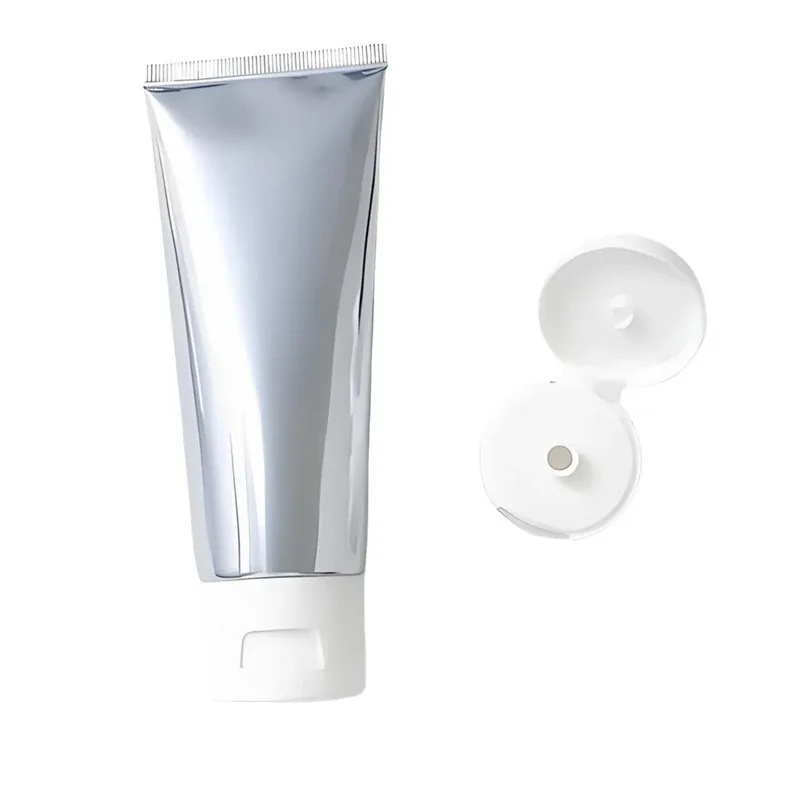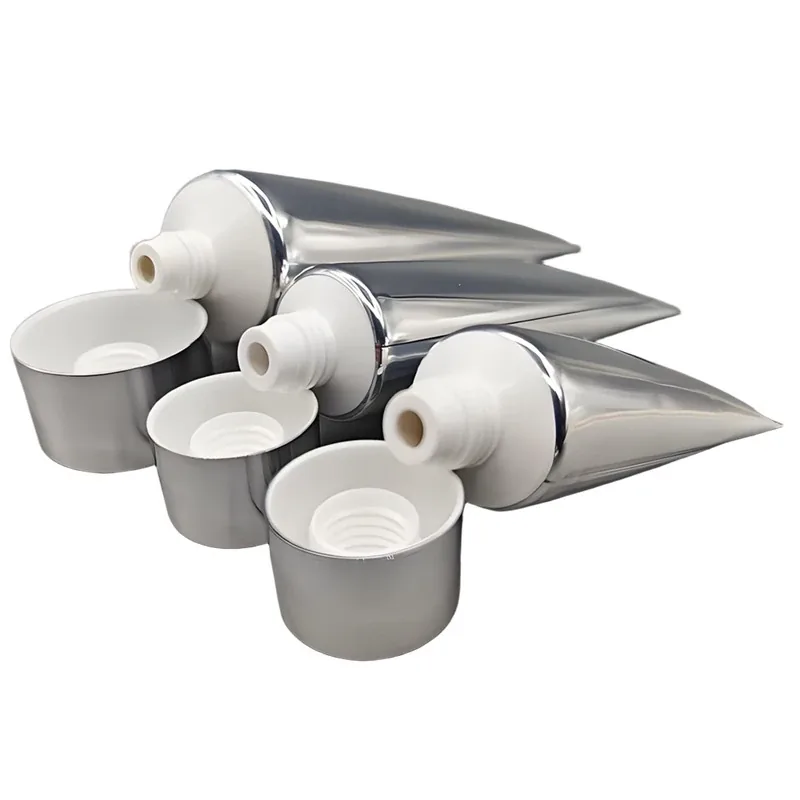
On our aluminium tube line I keep a drawer of failed seals. Off-spec seal widths, contaminated seals, one tube that burst under pressure during a client audit. New inspectors get shown the drawer in their first week, because the fastest way to teach someone what a defect looks like is to hand them one. This post opens that drawer: five defects we see most often in custom packaging, why each happens, where our quality control catches it, and how you can check for it yourself when goods arrive.
Before the defects, one paragraph on how "caught" is measured.
The baseline: AQL and what it actually promises
Buyers in this industry live and die by AQL — Acceptable Quality Limit, the sampling standard behind the phrase "inspected to AQL 1.0." The method itself comes from ISO 2859-1, known in the United States as ANSI/ASQ Z1.4. You define a lot size, the standard tells you how many units to pull, and then it tells you how many defects are allowed before the whole lot fails. Cosmetic packaging commonly runs AQL 1.0 for major defects and AQL 2.5 for minor ones — a common industry practice; the exact levels are whatever the two parties agree in the specification.
Two honest caveats. Sampling statistics means an accepted lot can still contain a few defects; it is not a guarantee, it is a managed risk. And a defective attribute that can be checked 100% — like a seal — should be, which is why our approach pairs AQL inspection with in-process controls at the machine. With that said, here are the five.
| Defect class | Common AQL level | Examples in cosmetic packaging |
|---|---|---|
| Critical | Not sampled — checked 100% | Leaking tube seals, burst tubes |
| Major | AQL 1.0 (common industry practice) | Color drift beyond the ΔE tolerance, foil lifting |
| Minor | AQL 2.5 (common industry practice) | Small print blemishes, minor scuffs |
Defect 1: Color drift between production runs
Why it happens. Print color is a moving system: a new ink batch, a change in the substrate's whiteness, press speed, even humidity in the printing hall can pull the result off target. The classic buyer complaint is not that a shipment is badly printed — it is that the reorder does not match the first order, and now the shelf mixes two shades of the same brand.
Where we catch it. Two ways. First, color is specified numerically up front, in CIELAB terms — the standard color space where the difference between two colors is expressed as a single ΔE value, so "close enough" becomes a number instead of an argument. The tolerance gets agreed before printing starts. Second, every production run is checked against the kept reference print — the signed color standard we pulled from the approved sample and stored, shielded from light, at the press. We compare under a D65 light booth, the standardized daylight source, because judging color under office fluorescents or window light produces exactly the arguments ΔE exists to prevent.
How to self-check. Keep your golden sample — the one you signed — and compare against incoming goods under a daylight lamp or actual north-facing daylight, never mixed lighting. If you can see a shade difference side by side, so will your customers. Reference the ΔE tolerance in your spec and ask for the measurement records, not just a pass mark.
Defect 2: Hot foil and print lifting
Why it happens. Foil decoration and ink both rely on adhesion, and adhesion fails for mundane reasons: insufficient curing time or temperature, a foil grade that does not suit the coating on that particular substrate, or a surface that arrived at the print unit with low surface energy — dust, release agents, or handling oils between the surface and the ink.
Where we catch it. Adhesion gets tested, not assumed. The standard method is the cross-cut tape test: scribe a small grid through the print down to the substrate, apply standard test tape over it, press it down firmly, then rip it off in one motion. Count how many squares of print come away. We run this against the actual production substrate for every decorated run, at start-up and at intervals through the shift, because adhesion that passed at setup can drift when the curing unit's temperature wanders.
How to self-check. On goods-in, press ordinary adhesive tape firmly onto a printed area — ideally over an area you scored lightly with a fingernail in a crosshatch — and pull it off quickly. Ink or foil on the tape is a reject signal. Also run a thumbnail along the edges of foil areas: foil that lifts at the border will flake in the customer's hand.
Defect 3: Leaking tube seals
Why it happens. A tube seal is a controlled melt: the seal jaw brings heat, pressure, and time together, and all three have a window. Outside the window you get weak seals. Contamination is the other culprit — a drop of product or coating residue in the seal area prevents the layers from bonding, and the failure only shows up after filling, which is the worst possible moment.
Where we catch it. Two in-process checks carry most of the weight on our tube lines, including the [aluminium cosmetic tube screw cap] line. The first is seal width: the flat, welded band at the end of the tube has a specified width, and operators measure it at intervals because width drift is the earliest visible symptom of jaw or temperature problems. The second is the leak test — finished, sealed tubes filled with a production-equivalent liquid, inverted under load and held, with additional pressure sampling to catch marginal seals that pass a gentle inversion. These are 100% or heavy-sampling checks, not AQL spot checks, because a leaking tube is not a minor defect; it is a returned order and a review you cannot delete.
How to self-check. Pull a handful of filled units, invert them on paper towel for 24 hours, then squeeze each tube firmly near the seal and along the crimp. Any seepage, any oil ring on the paper, reject the lot section. Check the seal width looks uniform down the batch — visible variation in the crimp is a warning worth escalating before filling.
Defect 4: Internal coating faults on aluminium tubes
Why it happens. Aluminium tubes carry an internal lacquer so the product never touches bare metal. Ours is a BPA-NI epoxy-phenolic internal coating — "BPA-NI" being the industry shorthand for a coating manufactured without intentionally added bisphenol A. The coating can still fail if it is under-cured, if coverage misses the shoulder or the nozzle area where geometry gets tricky, or if it is scratched by rough handling between coating and filling.
Where we catch it. Coating weight is measured against spec, cure is verified with standard solvent-rub and cure tests, and coated shells go through visual inspection for pinholes and uncovered areas before they ever reach a filling line. This matters beyond aesthetics: packaging must not transfer substances to the cosmetic product that could harm users, per Regulation (EC) No 1223/2009, and the internal coating is what stands between an aggressive formula — think essential-oil-rich blends or high-percentage actives — and the aluminium wall.
How to self-check. Cut open one sacrificial tube per batch. The internal surface should look uniformly coated, including into the shoulder, with no bright bare-metal patches. If the product has any odor transfer or discoloration in stability samples, escalate immediately and ask the supplier for the coating certificate and cure records from your batch.
Defect 5: Transit breakage
Why it happens. Glass survives the production plant and dies in the parcel network. The usual causes are a carton designed around appearance rather than drop performance, missing or under-spec partitions that let bottles touch, and void fill that compresses so the stack turns the contents into impact absorbers.
Where we catch it. Every new packaging configuration gets a transit test modeled on ISTA 3A — the International Safe Transit Association's parcel-distribution protocol, which combines drops, vibration, and compression. We test with filled units at worst-case fill, because an empty bottle and a full one behave very differently when dropped, and the pack has to survive the full one. Failures feed straight back into carton design: more partition, stronger board, repositioned void fill.
How to self-check. Keep a few retail-ready units from goods-in and drop them — deliberately, onto a hard floor, from roughly waist height — in the orientations a parcel actually lands: on a corner, on an edge, on a face. Then open and inspect. Ten minutes of deliberate breakage tells you more about your carton than any courier promise, and doing it before peak season is a gift to your future self.
What a buyer can actually ask for
Notice the pattern across all five defects: each one is controlled by a specification, a measurement, and a reference standard kept somewhere. That is the whole discipline. If your supplier quality conversations do not include those three things, the inspection report you receive is decoration. Ask for the AQL plan in writing, the reference samples kept at both ends, and the test records behind the pass marks — our quality system runs under ISO 9001:2015, and the certificate is available on request, but the records are what protect your brand.
| Defect | Root cause | Where QC catches it | Buyer self-check |
|---|---|---|---|
| Color drift | New ink batch, substrate whiteness, humidity | ΔE against the kept reference under D65 | Golden sample compared in daylight |
| Foil/print lifting | Under-curing, mismatched foil, low surface energy | Cross-cut tape test on the production substrate | Tape pull over a crosshatch |
| Leaking seals | Heat/pressure/time window, contamination | Seal width checks plus 100% leak testing | Invert filled units on paper for 24 h |
| Coating faults | Under-cure, missed coverage, scratches | Coating weight, solvent-rub, visual inspection | Cut open one sacrificial tube per batch |
| Transit breakage | Under-partitioned carton, compressing void fill | ISTA 3A transit test with filled units | Deliberate drop test on retail-ready units |
We wrote a piece on the seven steps of cosmetic packaging development about how a project moves from brief to production; quality control is where most of what you just read lives. If you have a defect history — returns, complaints, that one shipment nobody talks about — send it over. We will map each failure to the checkpoint that would have caught it, send samples from the relevant lines, and quote the program. The drawer stays at the factory. Your returns bin does not have to fill up the same way.