
A client once sent us two versions of their holiday set: the same serum duo, same insert, one in a folding carton, one in a rigid magnetic box. The rigid version retailed about forty percent higher on their site. Same product. The only thing that changed was how the box felt when it opened. That is the whole argument of this article in one anecdote — but the decision is rarely that clean, because shipping, storage, and unit economics all push back.
So let me walk through how the two structures actually differ, and where each one earns its keep in a D2C beauty context.
Two structures, two philosophies
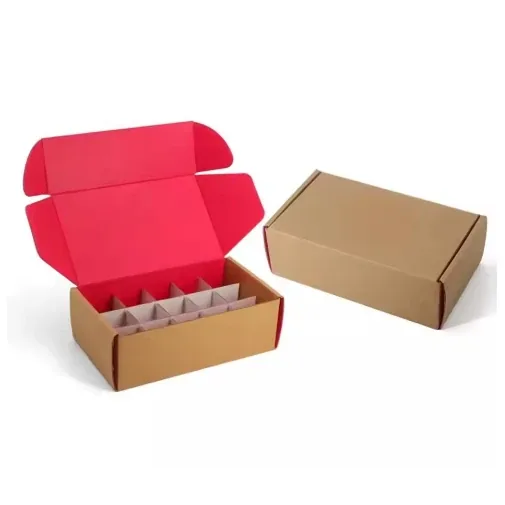
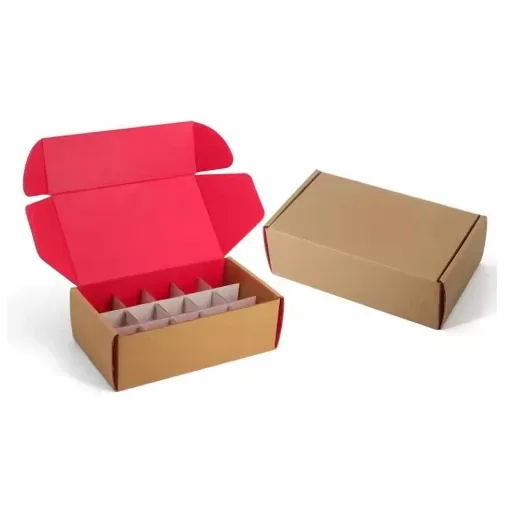
A folding carton starts as a die-cut sheet of paperboard, gets printed and finished flat, and folds into shape — by machine, or by hand at very low volumes. The board is usually in the range you would expect for a carton, light and creasable. The box ships flat, stores flat, and pops open at the packing station. Everything about it is built around efficiency.
A rigid box is built, not folded. Greyboard — a thick, dense chipboard that does not crease — is cut into panels, wrapped with printed or specialty paper, and glued together into a box that arrives already assembled and does not collapse. The walls are substantial. The lid has real weight to it. When a customer lifts one, the structure itself communicates value before any printing does.
Neither is better. They answer different questions. A carton asks "how do I protect this product at the lowest cost and volume?" A rigid box asks "how do I make this feel like a gift even when nobody wrapped it?" Everything downstream — freight math, storage plans, unboxing design — follows from which of those questions is yours.
Shipping: what survives the parcel network
Here is the uncomfortable truth about D2C: your primary packaging will get thrown, stacked, and rained on, and no premium structure fully opts you out of that. What differs is how much help each one needs.
A rigid box has genuine compressive strength from its greyboard walls. It holds its shape under stacking and it absorbs rough handling better than a bare carton. But it is not armor — corners can dent, wrap paper can scuff, and a magnetic lid can arrive with the magnet set knocked loose if the parcel gets punished. Most D2C brands shipping rigid boxes still put them inside a protective outer layer, because e-commerce parcels are typically boxed in corrugated outers as standard courier practice anyway.
A folding carton, on its own, is not built to be a shipping container. It is a shelf box. Sent solo through a parcel network, it will arrive looking tired — creased corners, scuffed print, occasionally popped seams. So brands shipping cartons directly to consumers wrap the math around a secondary layer: a corrugated shipper, molded pulp or paper cushioning, and the carton nested inside. This is the standard pattern, and it works. The carton's job is the shelf and the unboxing moment; the corrugated outer does the survival work.
What that means practically: whichever structure you choose, the real shipping question is not "which box is stronger" but "how many layers does my customer open, and what does each layer say about the brand?" A rigid box inside a plain corrugated mailer still delivers its ceremony at layer two. A carton needs its cushioning layer designed with a bit of thought, or the reveal falls flat.
One more note on testing. Whichever structure you land on, run a parcel test before the season ships — pack ten units the way your 3PL actually will, hand them to the courier, and have them sent back. The samples that return will tell you more about corners, seams, and magnet sets than any spec sheet. We do this for clients ahead of every holiday launch, and the fixes it produces are always cheap compared with the returns it prevents.
Cost and storage: where folding cartons win
Unit cost is not close. A printed folding carton costs a fraction of a rigid box of the same footprint — the board is lighter, the process is faster, and the die-cutting and gluing are highly automated. Rigid boxes involve more handwork: wrapping, gluing, assembling, more labor minutes per unit, more material per unit.
Storage and freight are the less obvious half. Cartons ship and warehouse flat, which is one of the quiet reasons the paper packaging industry moves so much volume on pallets — flat-packed cartons and folded corrugated both save enormous warehouse volume compared with assembled boxes. A rigid box, by contrast, takes up its full assembled volume forever. Set-up boxes eat shelf space, freight space, and your 3PL's storage line items. I have watched brands get genuinely surprised by dimensional-weight charges on rigid gift sets, because a beautiful, airy box ships air.
There is a middle path most brands eventually find: keep the flat-pack economics where you can and spend the rigid budget only where it pays.
Unboxing: where rigid boxes win
Then there is the ceremony, and this is where structure becomes brand strategy.
The magnetic closure box is the modern default for premium sets — the lid resists slightly, then gives, and that resistance is the moment. The neck gift box adds a second beat: an inner tray that rises out of the outer sleeve as you lift, a small mechanical pause that photographs beautifully for unboxing content. The drawer box pulls out on a ribbon or finger notch — slower, more deliberate, and very good for sets with multiple items arranged inside.
A folding carton can do some of this. A tuck flap is a tuck flap, but cartons support sleeve-over-tray formats, windows, and well-designed interior prints that make opening pleasant. A sturdier FSC-certified carton with a good interior print can carry a mid-price skincare set perfectly well, and it carries the fiber claim with it. What a carton cannot fake is weight. There is no fold in the world that makes 350gsm board feel like a greyboard lid. If the unboxing moment is the marketing — and for D2C beauty, social unboxing is real distribution — rigid structure is the honest way to buy that moment.
The hybrid: both, in the right places
My favorite answer for D2C beauty sets is usually not either/or. Common working setups:
- Rigid outer, carton inners. A magnetic or neck rigid box as the hero, with individual folding cartons holding each SKU inside. Best for gift sets where the box stays in the customer's home.
- Carton outer, rigid insert. A printed folding carton over a greyboard tray or easel that holds the product. You get some structural weight and shelf presence at carton-ish cost.
- Carton sleeve over rigid base for smaller premium items — sleeve carries the print story, base carries the weight.
The hybrid logic is simple: pay for rigid structure where the customer touches and keeps it; use carton economics everywhere else.
| Aspect | Folding carton | Rigid box |
|---|---|---|
| Structure | Die-cut board, folded to shape | Greyboard panels, wrapped and glued |
| Shipping | Needs a corrugated outer to survive the parcel network | Holds its shape; corners can still dent |
| Storage and freight | Ships and warehouses flat | Takes up full assembled volume forever |
| Unit cost | A fraction of rigid — light board, automated gluing | More material and handwork per unit |
| Unboxing | Pleasant with a good interior print | Real weight and resistance; ceremony built in |
| Best role | Everyday SKUs, replenishment, retail dual-duty | Gift sets, holiday editions, premium heroes |
A rule of thumb by price point
Brands ask me where the line sits. Rough heuristics from watching a lot of launches, not laws:
- Under roughly twenty dollars retail: folding carton, almost always. Spend the savings on print quality and a good interior.
- Twenty to fifty: carton for single items, rigid for gift sets and holiday limited editions. This is the band where the hybrid setups live.
- Fifty and up: rigid box territory. At this price a carton can read as a downgrade, and the gift-set psychology is working in your favor anyway.
Two modifiers move the line. Subscription or replenishment SKUs skew carton — nobody wants a drawer box arriving every month. And retail-plus-D2C dual distribution skews carton too, because your retail buyer will want shelf-efficient packaging and your carton does double duty. Holiday sets run the other direction: a rigid box that would be indulgent in March is defensible in December, when gifting intent is doing the justification for you.
None of this is fixed. It is a starting position to argue with your finance team.
How we would start
If you bring us a set, we usually quote it both ways — carton version and rigid version — so the trade-off is on paper with real numbers, including the freight implications. We run a wide paper packaging range across our four plants, and printing tops out at six colors, which is plenty for most beauty lines and keeps the ink story clean for sustainability claims.
Send us your SKUs, the retail price band, and whether this is a year-round line or a holiday set. We will suggest the structure tier that fits, run the hybrid option if it makes sense, and get samples of both structures into your hands. The difference between carton and rigid is a spreadsheet argument until you hold both — then it stops being one.